OKC-area citizen lives independently thanks to tribal programs
This article appeared in the January 2016 edition of the Chickasaw Times
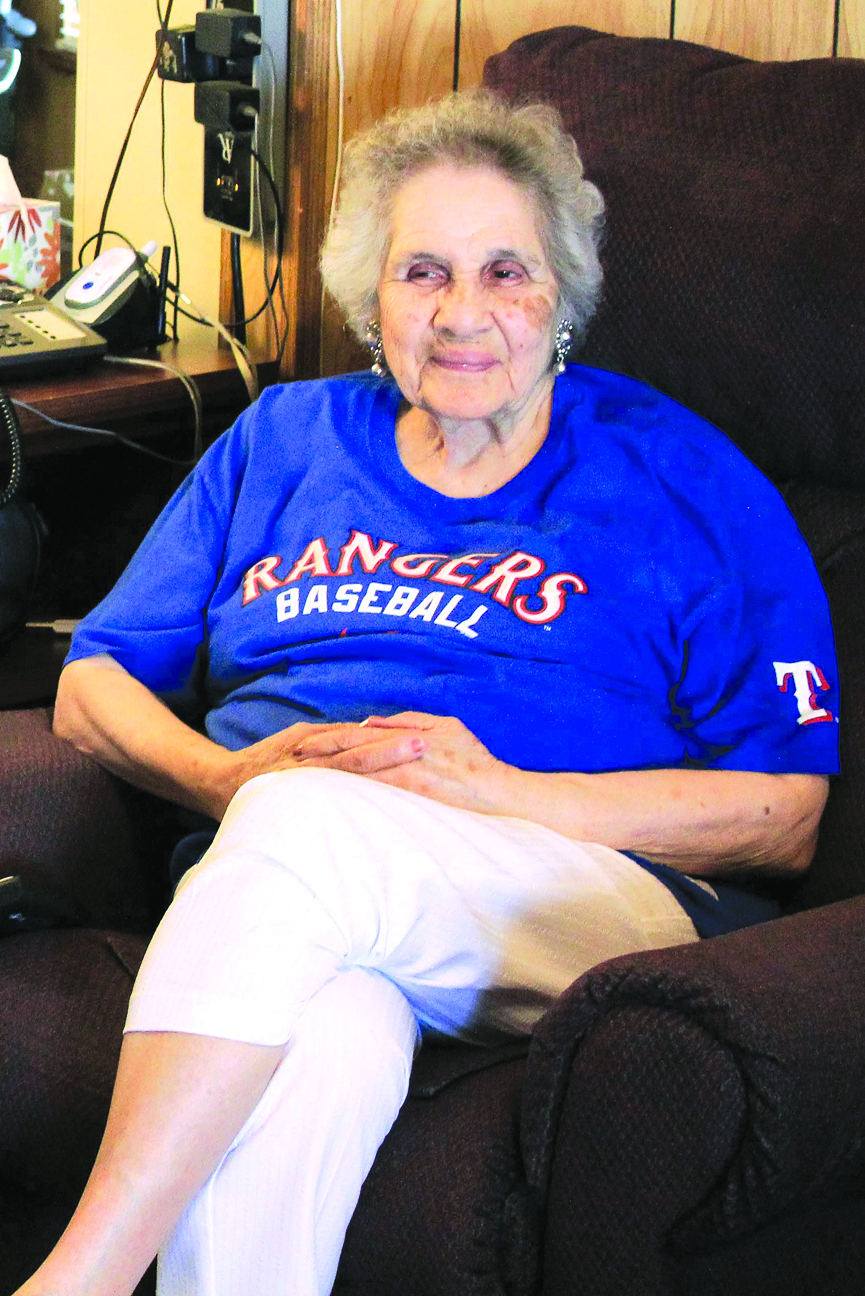
There are few “sure things” in life, but one that can be counted on is professional ball games playing on television in Edith Platt’s living room. Described by friends as “Grand Central Station,” Platt’s house has a front door that’s always open, and everyone is welcome to come in to root for their favorite teams.
While the open door policy of her home leads to a lot of traffic on her quite neighborhood street in downtown Moore, Oklahoma, Platt’s neighbors wouldn’t have it any other way. At 93, Platt is one of the most active people on the block. When most her age are thinking about retirement communities, she plans the next outing with her friends or improvement projects to her home.
“It is wonderful to still be living in my own home,” Platt said. “I just wouldn’t take anything for my little house. It is my home. It’s not fancy, but its home.”
According to Platt, her continued independence would not be possible without the help of friends and the Chickasaw Nation. Since moving into her home nearly 15 years ago, she has participated in many programs designed for citizens living outside the Chickasaw Nation administered by the Department of Community Services.
“I feel so blessed being Chickasaw. The tribe has helped me with repairs around my house,” Platt said. “My house is one of the oldest in Moore. Over the years, it has needed work to make it a home, something my tribe was able to help me with.”
Renovations on Platt’s house have included the addition of a handicap-accessible bathroom, siding on her home, replacement of subflooring in her utility room, replacement of her front porch and repairs to her roof, among other projects.
Justin Padden, owner of J & D Construction and Remodeling and Platt’s contractor, explained most of the work done to the house is routine maintenance.
“Almost all the work done to the house has been general upkeep. We recently fixed a leaky roof and sagging floor in the utility room,” Padden said. “Both could have become major problems and been dangerous down the road. Edith was excited to get have new linoleum laid and her ceilings painted.”
According to Padden, working with the Chickasaw Nation is one of the easiest process he has encountered.
“We receive a check made out to me and Edith for the estimates I provided. Once Edith is satisfied with the work, she signed off on the check and I am able to deposit it,” Padden said.
Moore is nationally known for its severe weather and the tornados that have struck the city. While not having experienced direct damage to her home from storms, over the years, Platt has made improvements that reflect her preparedness for weather events.
“In this part of the country, we have a lot of tornados and pretty bad winters. When the power went off, I was without heat,” Ms. Platt said. “We put in the (gas) wall heater. Now I have heat when the power is down. I have had to use it several times when the power was off.”
Platt also has a storm shelter provided by the tribe that was placed just feet from her back door. Sharing a yard with her neighbors and nephew, she says the shelter open to everyone.
“My shelter is large. Neighbors without shelters of their own come and sit with me while storms are at their worst,” Ms. Platt said. “I have a hard time getting in and out of it (the shelter). They can help.”
Community Health Representative presents solutions
Platt’s life changed after a stroke left her partially paralyzed. According to Platt, her Chickasaw community health representative (CHR) has made it easier for her to live at home, and feel secure in doing so.
“Don, my CHR is wonderful! Anytime I need anything, he is here. He tells me about the things available to me,” Platt said. “I told him I was a little antsy about getting in and out of my old tub. One day, he took a look at the bathroom and told me we were going to do something. We were going to put in a walk-in shower. He called me not too long after and told me we were going to get a handicap grant from the Chickasaws to make the bathroom safer.”
According to Donald Burkhart, Platt’s current CHR, the services available to Platt can be found by anyone within the programs and services book available to all Chickasaw citizens.
“I keep up with the services offered to us. I read the programs and services book,” Burkhart said. “Also, being around it (citizens) you find out about what’s offered. It’s wonderful to be able to help others and complete the tasks needed by others.”
With all the work done to Platt’s home, the program that may make her feel most comfortable living alone is her medical alert necklace provided by the Chickasaw Nation. According to Platt, she feels comfortable day and night with it within reach.
“When I am at home alone, the (medical) necklace makes me feel very, very safe. It rings to the fire, ambulance and police. If I would ever need anything, it would just ring them right up.”
Housing Grants Available to At-Large Citizens
Since purchasing her home, Platt has applied and used the Chickasaw home improvement and handicapped accessibility grants, as well as the one-time storm shelter program provided by the Chickasaw Nation.
According to Terry Davis, director of housing management services, housing grants are available to assist low income citizens with home improvement projects, while storm shelters are available to all tribal citizens across the United States.
“The grants provide citizens in need the ability to maintain their home and live in a safe environment no matter where they live,” Davis said. “Income based, they are used for just about anything. Citizens have had contractors repair roofs, plumbing and made their house more accessible if (they are) disabled.”
The home improvement grant provides up to $5,000 for home repair or improvement projects, while the handicapped accessibility grant is specifically designed to make homes safer and easier to live in for citizens with disabilities. Citizens can apply for both grants every two years.
“Ms. Platt recently received a handicapped accessibility grant to put in a walk-in shower,” Davis said. “This is a common request from citizens, as well as wheel chair ramps, widening doors and lowering counter tops.”
According to Davis, the storm shelter program is available to all citizens who own their homes. It does not have income restrictions. For citizens at large, grants up to $2,500 can be provided for the installation of storm shelters.
For more information on any of these grants, contact the Housing Administration office at 580-421-8800.